
Picky Dog or Appetite Change? What to Check
Distinguish an established feeding preference from a new appetite change. Review your dog’s routine and know when to ask a veterinarian for help.
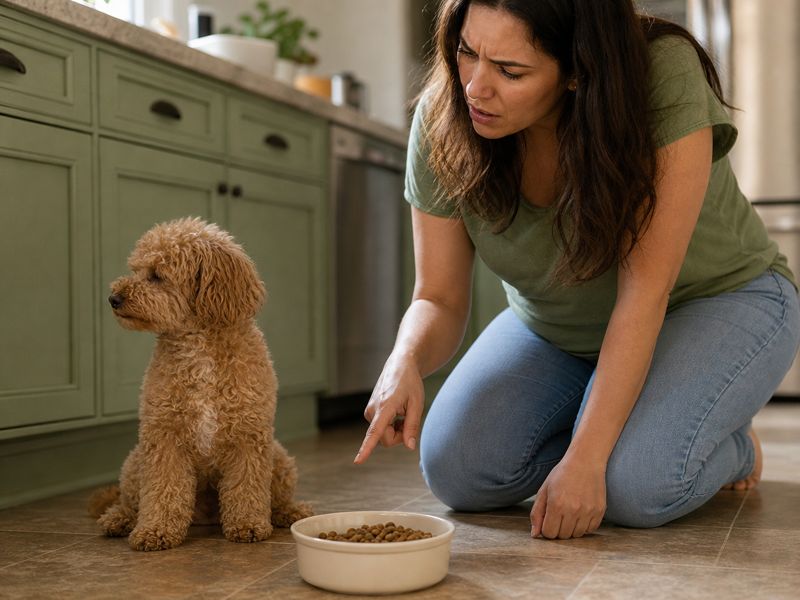
Illustrative photo, not a real customer.
What it can be a sign of
There are two very different dogs here. One turns down dinner but takes a treat happily. That is usually learned fussiness. The other has stopped wanting food. That is a loss of appetite, and it can be a sign of dental pain, nausea or illness.
If your dog is refusing treats too, losing weight, or has changed suddenly, see your vet.
How it connects to the bowl
A dog who skips a meal and then gets chicken on top learns that skipping works. Toppers, table scraps and frequent treats all teach the same lesson, and they take the edge off hunger before mealtime.
Too many extras also unbalance the diet, because they push out the complete food.
What may be missing or overdone
Overdone: treats, toppers and choice. Treats and extras should stay under 10% of daily calories. Missing: a routine. Free-feeding all day gives a dog no reason to eat at mealtime.
What can help
Offer meals at set times and lift the bowl after 15 to 20 minutes. Keep to one food for a few weeks. Count the treats and cut them back. If you use a topper, keep it small, the same every day, and inside the 10%.
Avoid changing foods every time a meal is refused. That is the pattern that builds a picky eater.
It is rarely just pickiness
Check for bad breath, chewing on one side, drooling, weight loss, vomiting or low energy. Any of those with a poor appetite belongs with your vet, not with a new bag of food.