Bad Breath in Dogs: Mouth Care and Next Steps
Explore dog bad breath, mouth-care questions, dental-product labels and signs to discuss with a veterinarian. Food and chews are only part of the picture.
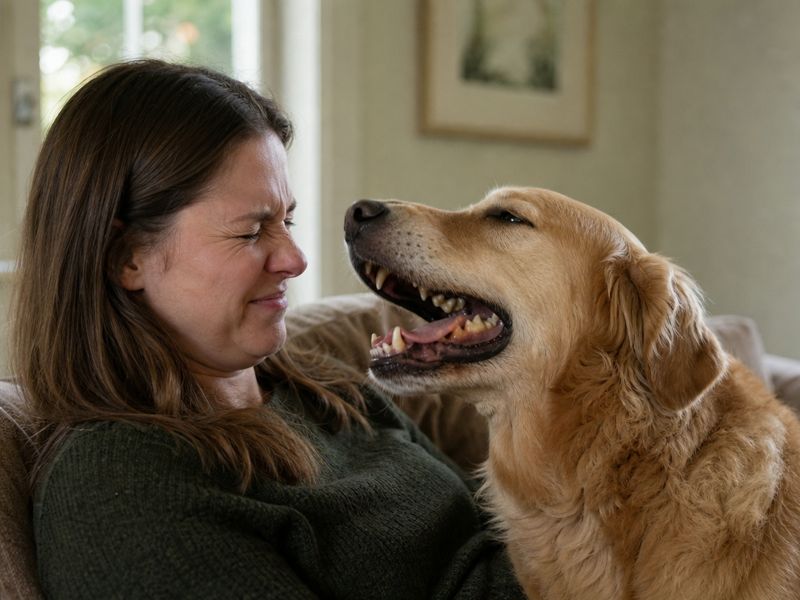
Illustrative photo, not a real customer.
What it can be a sign of
Bad breath is common with gingivitis, the first stage of gum disease. Bacteria build up as plaque at the gum line, the gums turn from coral-pink to red and swell at the edge, and they bleed easily.
Gum disease is the major reason dogs lose teeth. Gingivitis is often first noticed at about two years of age. Left alone it can become periodontitis, which usually begins between four and six years and cannot be reversed.
How it connects to the bowl
Diet is one of the contributing factors, alongside breed, genetics and age. Dogs that eat hard kibble regularly develop fewer problems, because chewing it has a mechanical cleaning effect on the teeth.
So a routine of only soft food, with nothing that makes the teeth work, gives plaque an easier time. Small-breed dogs are hit harder by periodontitis than large breeds.
What may be missing or overdone
Missing in most routines: any daily cleaning. Plaque comes back within days, so what counts is what happens every day at home. Also missing in many bowls: anything with a proven cleaning effect.
Overdone: soft, sticky treats that add calories and do nothing for the teeth.
What can help
Brushing is the best home care there is. Only the outside surfaces need doing, and it has to be a toothpaste made for dogs, never one made for people.
If your dog will not accept brushing, ask your vet about foods, chews, water additives and other products that help control plaque. The Veterinary Oral Health Council lists the ones that have passed its trials. Gingivitis can be reversed with proper cleaning, usually a professional clean under anesthesia followed by daily care at home.
It is rarely just the breath
Look for red or bleeding gums, yellow-brown tartar, chewing on one side, dropping food, pawing at the mouth or a new reluctance to eat hard things. Any of those means a dental check. So does bad breath in a dog who is also drinking more or losing weight.