Dog Weight Gain: Food Portions and Hidden Calories
Review food portions, treats and other calorie sources in your dog’s routine, and prepare questions about body condition and weight for your veterinarian.
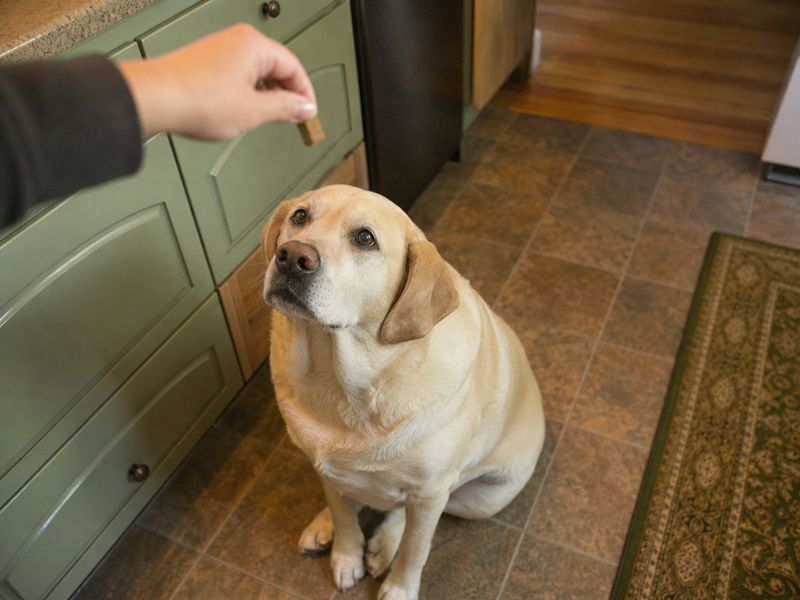
Illustrative photo, not a real customer.
What it can be a sign of
Usually it is a sign of more calories going in than being used. Sometimes weight gain or low energy comes from a medical condition, so a dog who gains weight without a change in food or exercise should see the vet.
A quick check at home: you should be able to feel the ribs without pressing hard, and see a waist from above.
How it connects to the bowl
The main meal is rarely the whole story. Treats, dental chews, toppers, training rewards and table scraps add up, and most owners have never added them together. A scoop that is “about a cup” can be a third more than a cup.
What may be missing or overdone
Overdone: extras. Treats and extras should stay under 10% of daily calories, and many routines are well past that. Missing: measurement. Without a real measure for the food and a count of the extras, nobody knows what the dog eats.
What can help
Weigh your dog and write it down. Measure the main food with a proper measuring cup or a kitchen scale. Count every extra for one week. Swap some treats for part of the daily food ration. Ask your vet for a target weight and a safe pace to reach it.
It is rarely just the weight
Extra weight loads the joints and makes stiffness and arthritis worse. Watch for slowing on walks, heavy panting and trouble getting up. Do not cut food sharply on your own. A vet-guided plan keeps the diet complete while the weight comes off.